How the Strait of Hormuz Risk Is Being Repriced Into the Market After the Latest US–Iran Escalation

RockFlow Jacko
July 10, 2026 · 13 min read
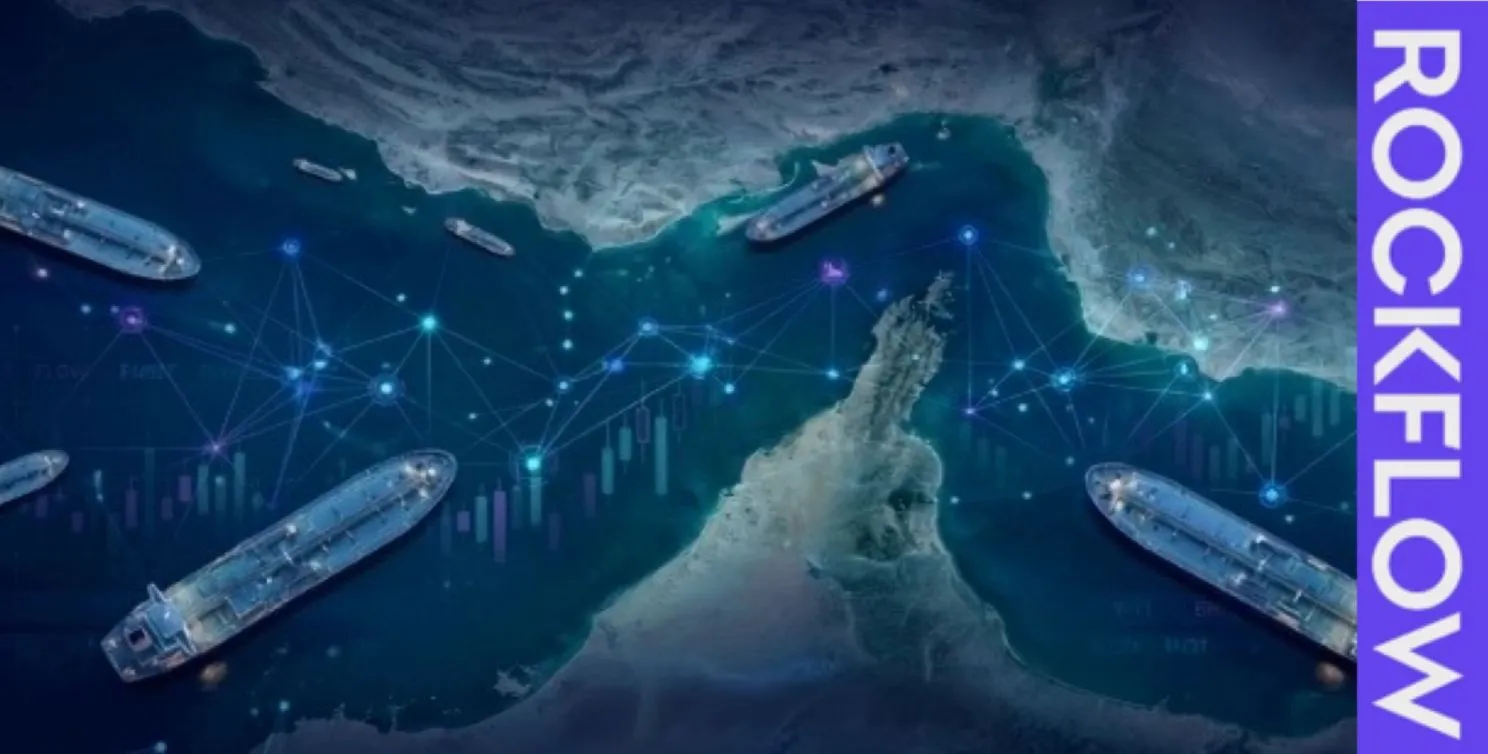
Following a new round of US strikes on Iran, the Strait of Hormuz has moved back to the center of global markets. In nearly the same window, Iran responded quickly, the US revoked Iran's crude oil sales waivers, and Brent crude moved higher. What began as a geopolitical headline has rapidly turned into a clear market-pricing narrative: Middle East supply risk, chokepoint security, and global risk appetite are all being repriced.
For markets, what matters is rarely the headline itself — it's how the risk transmits into asset prices. The Strait of Hormuz is one of the most critical nodes in the global energy transportation system. Once security expectations shift, oil prices, freight rates, insurance costs, inflation expectations, and risk sentiment tend to adjust together.
Key Points
- The renewed US–Iran conflict has pushed the Strait of Hormuz back into focus as a core market variable.
- The US revocation of Iran's crude oil sales waivers has reinforced supply-side uncertainty.
- Brent's move higher signals that a geopolitical risk premium is being priced back into oil.
- The linkages across energy, tanker shipping, defense, and macro inflation channels are strengthening.
- Names such as XOM, CVX, SHEL, BP, FRO, DHT, INSW, STNG, LMT, RTX, and NOC are increasingly showing up in the same watchlist.
- Historically, without a sustained physical supply disruption, geopolitical premiums tend to fade relatively quickly.
Why This Round of Conflict Triggered an Immediate Repricing
This event is particularly sensitive because several risk factors have been triggered at the same time. The military action has raised expectations of further escalation, Iran's response has increased the odds of a prolonged standoff, and the US revocation of Iran's crude sales waivers has directly tightened the supply-side outlook.
When military risk, chokepoint security, and export constraints stack up together, markets typically don't wait for an actual physical disruption before reacting. Instead, they start pricing in potential shipping disruptions, export restrictions, and policy uncertainty ahead of time. Brent's move higher is essentially a reflection of this forward-looking repricing.
What Exactly Is the Hormuz Risk Repricing?
The most direct channel is crude supply risk. Pressure on Iran's export outlook shifts the market's view of marginal supply, and any decline in the stability of Middle East supply tends to give international oil prices additional support.
The second channel is shipping risk. Once Hormuz becomes a flashpoint, the market quickly turns its attention to tanker safety, war-risk insurance, freight rate volatility, and route adjustments. These shifts may not cause an immediate physical disruption, but they are enough to raise the sensitivity of the entire tanker shipping complex.
The third channel is the macro and sentiment transmission. Higher oil prices lift inflation expectations, which then feed back into rates and broader risk-asset pricing. At the same time, rising geopolitical tension tends to weigh on risk appetite, pushing capital toward resources, defense, and other defensively positioned areas of the market.
Which Stocks Tend to Show Up in the Same Watchlist
When geopolitical risk pushes oil prices higher, the market usually clusters a group of highly correlated assets into the same watchlist.
Energy Stocks: The Most Direct Read on Oil
Exxon Mobil (XOM), Chevron (CVX), Shell (SHEL), and BP (BP) are the most direct proxies. These names carry stronger correlation with international oil prices, and when the market starts pricing in a bigger supply-disruption premium, they typically attract attention first.
Tanker Stocks: Distinguishing "Crude Tankers" From "Product Tankers"
The reaction across tanker names is more nuanced and should not be treated as a one-way beneficiary trade.
- Frontline (FRO) and DHT Holdings (DHT) are more exposed to crude tankers, with key sensitivities to Middle East loadings, VLCC rates, and the ton-mile shifts driven by re-routing.
- International Seaways (INSW) has a more diversified business, spanning both crude and product tankers.
- Scorpio Tankers (STNG) leans more toward product tankers, and its earnings elasticity tends to come from product trade flows, refinery throughput, and regional arbitrage — not purely from crude transportation dynamics.
As a result, the transmission for tanker stocks is two-sided:
- Bullish scenario: If tankers are re-routed via the Cape of Good Hope, voyage distances lengthen, fleet turnover drops, effective capacity tightens, and freight rates tend to move higher.
- Bearish scenario: If actual loadings out of the Gulf decline meaningfully, cargo volumes suffer, and higher freight rates may not fully offset the revenue hit from lower volumes.
That's why tanker stocks are better framed as an increase in volatility sensitivity rather than a straightforward one-way beneficiary trade.
Defense Stocks: Not Just a Sentiment Trade, but a Product-Level Mapping
Lockheed Martin (LMT), RTX (RTX), and Northrop Grumman (NOC) frequently reappear in the same rotation. Historically, defense stocks benefit during geopolitical escalations through two channels: rising expectations for defense budgets, and safety-seeking capital rotating into defensively positioned sectors.
This time, however, going one level deeper reveals that the logic isn't purely sentiment-driven.
- LMT is closely associated with fighter platforms, precision-guided munitions, and missile defense systems.
- RTX has more direct exposure to air and missile defense, missile systems, and aerospace components.
- NOC is more oriented toward advanced unmanned systems, missile defense, and strategic platforms.
In other words, the support behind defense names is not just a shift in risk appetite — it also involves the market remapping specific equipment chains that gain relevance as tensions rise. That produces a dual driver: product-level exposure plus sentiment premium.
How Long Can the Risk Premium Last?
This is one of the questions markets care about the most.
Historically, oil-price shocks driven by geopolitical events don't always extend in a straight line. Much of what markets actually trade is not "risk that has already materialized," but "whether risk will continue to escalate." If the conflict does not evolve into a sustained supply disruption, geopolitical premiums usually fade gradually after sentiment peaks.
That means the path forward will depend on a few concrete variables: whether transit through the strait is genuinely disrupted, whether crude exports fall on a sustained basis, and whether either side signals further escalation.
Which Buffers Are Worth Watching
Beyond the conflict itself, markets are simultaneously evaluating potential buffers.
The first is the Strategic Petroleum Reserve (SPR). If oil-price volatility widens materially, whether the US and its allies tap reserves will shape the market's view of how long the supply shock might last.
The second is the OPEC+ supply response. If key producers move to increase output or send a clearer signal on stabilizing supply, some of the market's concerns around shortages may be offset.
The third is that both the US and Iran have incentives to control the pace of escalation. For the US, energy prices and inflation expectations are politically and economically sensitive. For Iran, the Strait of Hormuz is a valuable leverage point, but fully disrupting transit would come with equally high costs. This mutual restraint tends to limit how deeply the market prices in worst-case scenarios.
Why This Is Worth Turning Into a Thematic Trade
US–Iran tensions, the Strait of Hormuz, crude supply, tanker safety, defense positioning, and inflation expectations may look like separate storylines, but inside the market they tend to converge into a single pricing narrative.
For thematic tracking, the value isn't in explaining any single day of price action — it's in building a persistent framework: whether oil continues to price in a higher risk premium, whether energy and tanker names show stronger co-movement, whether inflation and risk appetite are affected more broadly, whether defense names keep drawing incremental attention, and whether supply buffers begin to take effect.
That's exactly why this theme fits naturally into the RockFlow & Bobby AI thematic tracking framework. It links geopolitical headlines with oil prices, sector mapping, and market sentiment into one clear market-pricing thread.
Final Thoughts
The latest round of US–Iran tensions has put the Strait of Hormuz back among the most sensitive nodes in global markets. With Iran's crude sales waivers revoked and Brent moving higher, the market has already begun repricing Middle East supply and shipping risk.
The more important thing to watch from here isn't just whether oil continues to move higher. It's how long the risk premium can hold, whether it spills further into inflation expectations and broader risk sentiment, and whether the available buffers and mutual constraints ultimately cap how deeply the market prices in worst-case outcomes.
FAQ
1. Why does the Strait of Hormuz have such a large market impact?
Because it is one of the most important energy transit corridors in the world, carrying a large share of global crude and LNG shipments. Any uncertainty around transit safety immediately pushes markets to reassess supply reliability, transportation costs, and the geopolitical premium in oil prices.
2. Why did this event push Brent higher?
Because markets faced military escalation, elevated chokepoint risk, and the revocation of Iran's crude sales waivers all at once. Supply expectations and geopolitical risk got amplified in the same window, which naturally supported oil prices.
3. Which stocks tend to attract attention around events like this?
Typically those most correlated with international oil prices — energy names such as XOM, CVX, SHEL, and BP; tanker names tied to shipping safety and rates such as FRO, DHT, INSW, and STNG; and defense names that tend to reprice during geopolitical stress such as LMT, RTX, and NOC.
4. How long do geopolitically driven oil rallies usually last?
It largely depends on whether the conflict actually disrupts supply and transportation. Without a sustained physical disruption, many historical geopolitical premiums have faded as sentiment normalizes.
5. Why do SPR and OPEC+ still matter here?
Because they represent the potential buffers that can absorb a supply shock. Whether it's strategic reserve releases or major producers adjusting output, both directly shape the market's view on how durable any oil-price move might be.