AMD Fell 8% After SpaceX Earnings While Nvidia Rose: Why Did AI Chip Stocks Diverge?

RockFlow Jacko
August 6, 2026 · 14 min read
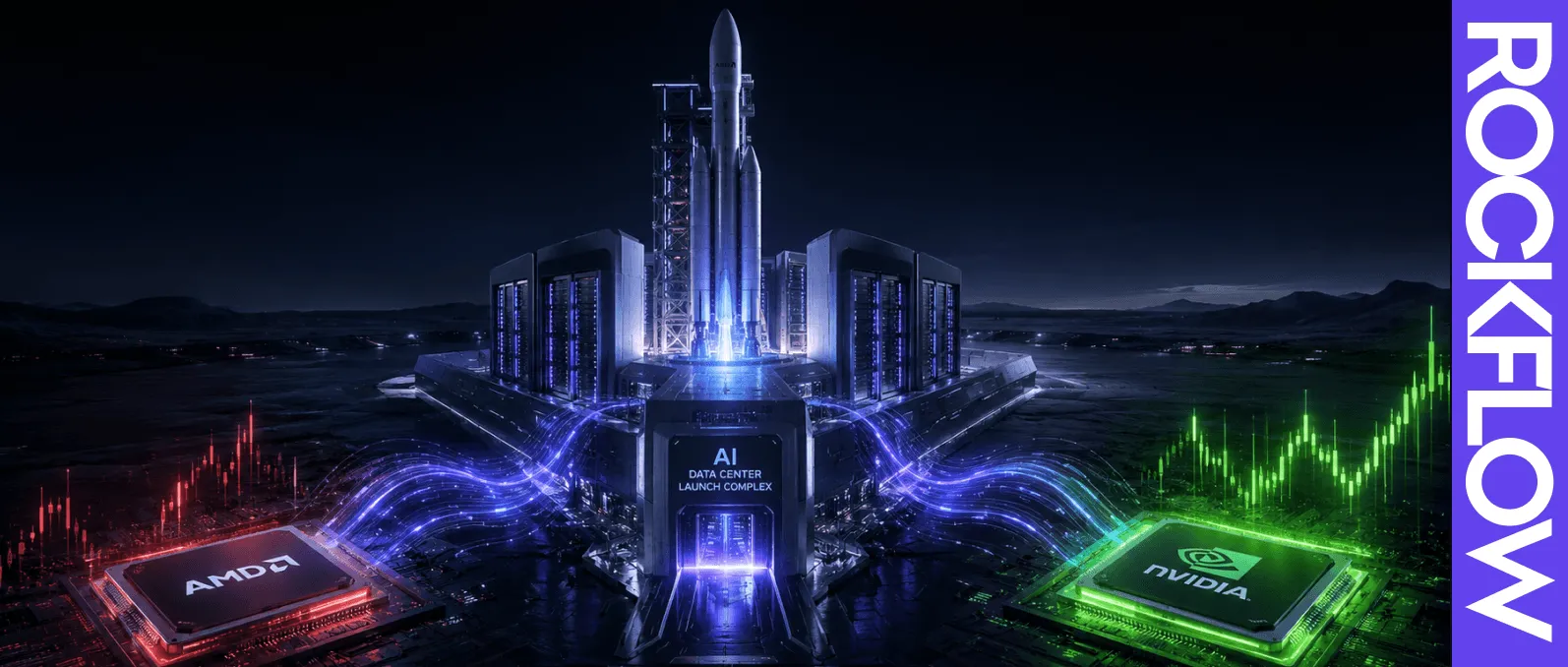
SpaceX (SPCX) reported 92% year-over-year revenue growth in its first quarterly results as a public company. Its AI-related capital expenditure, however, reached $15.828 billion.
In extended-hours trading following the earnings releases on August 4, 2026, AMD (AMD) fell more than 8%, while Nvidia (NVDA) moved higher.
Several factors contributed to this divergence. AMD faced elevated expectations surrounding its earnings, valuation and ability to deliver complete AI systems at scale. Nvidia received a high-profile customer signal from SpaceX’s platform selection. SpaceX, meanwhile, still needs to demonstrate that its rapidly expanding AI infrastructure can generate sustainable revenue and cash returns.
Key Takeaways
- What happened: SpaceX generated $7.814 billion in second-quarter revenue and recorded $15.828 billion in AI-related capital expenditure. AMD reported strong results during the same period, yet its shares fell more than 8% in extended-hours trading.
- Why the stocks diverged: SpaceX’s platform selection reinforced Nvidia’s position across chips, networking and software. AMD still needs to show that its AI system commitments can translate into timely deliveries and recognized revenue.
- What is the biggest risk: SpaceX’s return on capital expenditure, Nvidia’s system deliveries and AMD’s customer deployments all require confirmation from future operating and financial data.
1. What Happened?
SpaceX generated $7.814 billion in revenue during the second quarter of 2026, up 92% year over year and above the approximately $6.9 billion expected by the market.
Its net loss narrowed to $541 million, compared with $1.008 billion in the same period a year earlier.
The figure that drew the most attention was capital expenditure. SpaceX recorded $18.369 billion in total capital expenditure, including $15.828 billion allocated to its AI business, representing approximately 86% of the company’s quarterly capital expenditure.
That spending may cover several components of AI infrastructure:
- Compute & Servers, including GPUs, CPUs and server systems;
- Networking & Storage;
- Power Infrastructure, including substations and electrical equipment;
- Cooling Systems, including liquid-cooling equipment;
- Data Center Construction;
- Other long-term infrastructure.
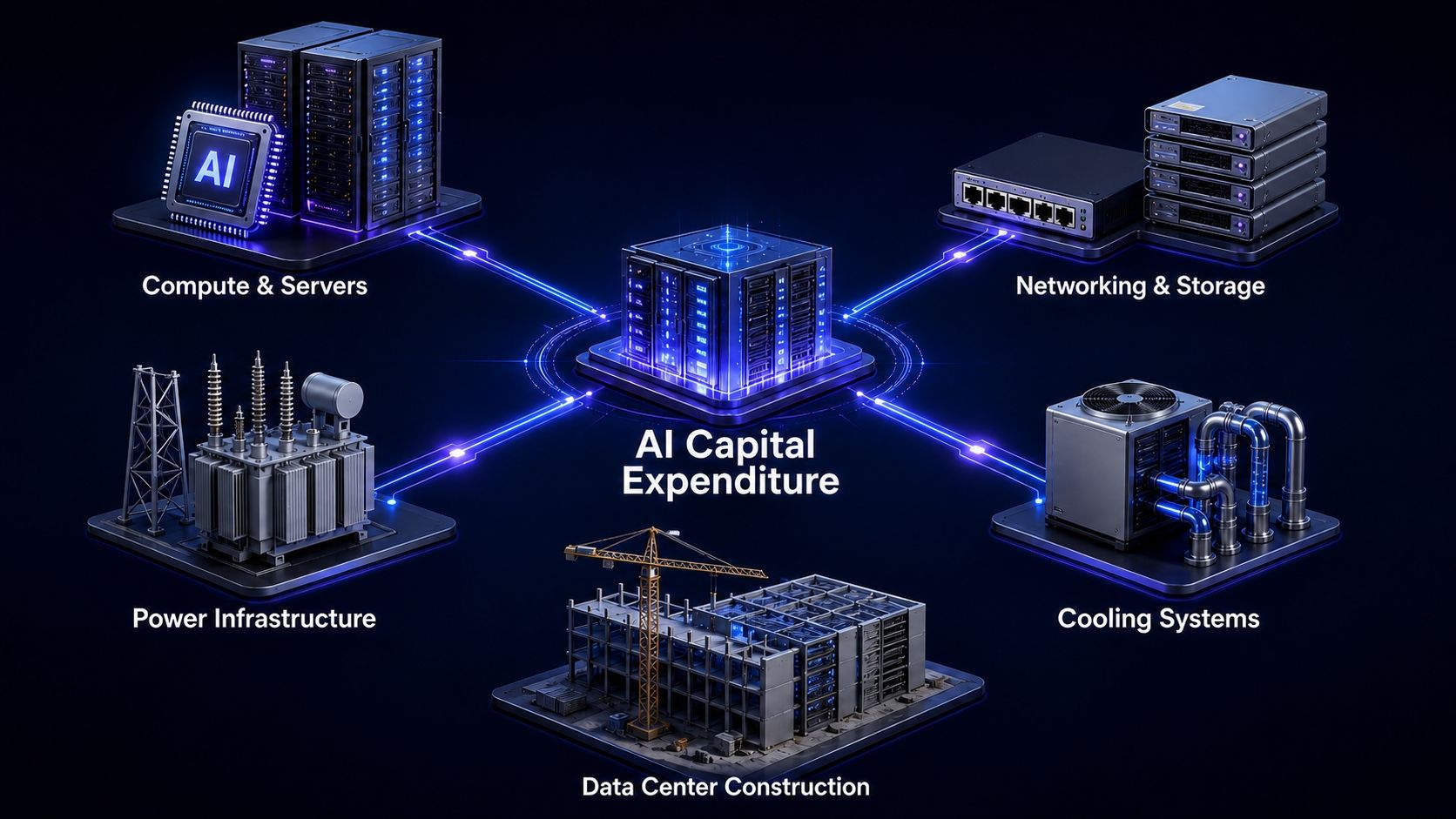
SpaceX’s AI capital expenditure may span Compute & Servers, Networking & Storage, Power Infrastructure, Cooling Systems and Data Center Construction.
The full $15.828 billion cannot be treated as a potential Nvidia order. SpaceX has not disclosed the value of its chip purchases. The figure also includes the power, networking, cooling and construction infrastructure required to build AI data centers.
SpaceX currently holds approximately $100 billion in cash, cash equivalents and marketable securities, providing a substantial near-term liquidity buffer. Capital expenditure may remain close to second-quarter levels over the next two quarters, making the company’s cash-consumption rate an important metric to watch.
2. Why Did Nvidia Receive a More Positive Market Reaction?
SpaceX said it currently plans to build its future AI infrastructure on Nvidia’s platform and specifically highlighted the Vera Rubin architecture.
The announcement provided a significant customer signal. A gigawatt-scale AI data center requires more than accelerator chips. Operators must coordinate:
- GPUs and CPUs;
- High-speed interconnects and cluster networking;
- HBM and server memory;
- Racks, power and liquid cooling;
- Software frameworks and development tools;
- Cluster scheduling and failure management.
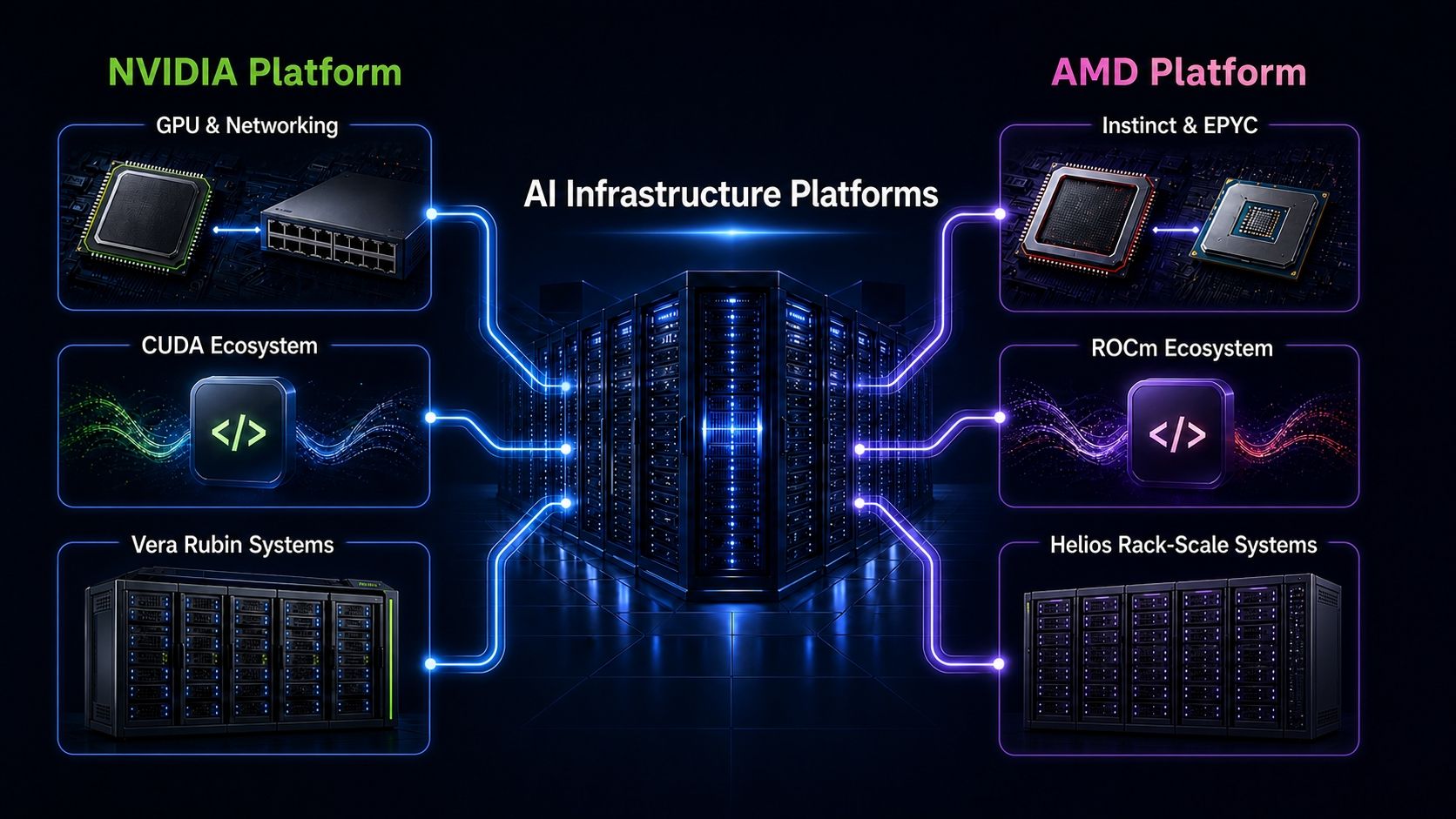
Nvidia’s product portfolio spans Vera Rubin, NVLink, Spectrum-X, InfiniBand and the CUDA Ecosystem. This integrated hardware and software stack can reduce uncertainty around compatibility, debugging and large-scale deployment.
SpaceX selected an AI infrastructure platform with multiple interconnected components. Chip performance remains important, but customers also consider networking, software, deployment speed and cluster stability.
Nvidia rose during the relevant trading period as the market focused on SpaceX’s platform selection. SpaceX has yet to disclose the size or delivery schedule of any specific purchase, so the potential revenue contribution to Nvidia still requires confirmation through order and shipment data.
3. AMD Revenue Grew 50%. Why Did the Stock Still Fall More Than 8%?
AMD reported $11.536 billion in second-quarter revenue, up 50% year over year. Data Center segment revenue reached approximately $6.7 billion, representing growth of 107%.
The company guided for third-quarter revenue of approximately $13 billion, plus or minus $300 million, above the market consensus at the time.
Despite those strong figures, AMD shares fell more than 8% in extended-hours trading. Three expectation gaps help explain the reaction.
High Growth Expectations Were Already Reflected in the Stock
AMD shares had risen substantially before the earnings release. The market was evaluating revenue growth alongside the company’s potential AI accelerator market share and its ability to deliver complete systems at scale.
Beating the published analyst consensus may still fall short of expectations already reflected in the share price. Strong results can coincide with a falling stock when some investors expect higher guidance or faster AI GPU growth.
Data Center Revenue Includes Both CPUs and GPUs
AMD’s Data Center segment includes EPYC server CPUs and Instinct AI GPUs.
The 107% increase in Data Center revenue indicates strong overall demand, but investors still want greater clarity on several questions:
- How much revenue came from Instinct GPUs?
- When will Helios systems reach volume deployment?
- Can the ROCm Ecosystem reduce customer migration costs?
- When will major customer agreements translate into revenue and cash flow?
The market still needs to determine how much of AMD’s growth came from AI accelerators and whether that revenue can be sustained.
SpaceX Strengthened Nvidia’s Platform Signal
SpaceX’s selection does not change AMD’s reported quarterly performance. It may, however, influence expectations surrounding new customers and system-level competition.
Large AI customers deploy complete clusters that combine chips, networking, software, power and operational systems. Once a platform has been selected, customers make long-term investments in its software and development tools, increasing the cost of switching.
SpaceX’s announcement strengthened the market narrative surrounding Nvidia’s system-level advantages, but it cannot explain AMD’s entire decline. AMD’s valuation, revenue mix and future delivery expectations also shaped the market reaction.
4. What Competitive Advantages Does AMD Still Have?
SpaceX’s decision to use Nvidia does not remove AMD from the AI infrastructure market.
AMD has announced several major customer agreements. Anthropic plans to deploy up to 2 gigawatts of MI450 Series GPUs through the AMD Helios rack-scale system, with the first 1-gigawatt deployment expected to begin in the first half of 2027.
AMD is also developing relationships with Microsoft, Meta, OpenAI and other cloud and AI customers.
These agreements must progress through product qualification, manufacturing, deployment and revenue recognition. Announced capacity represents the beginning of the process; actual deliveries determine when the financial impact appears.
Progress can be evaluated through:
- Instinct GPU revenue;
- Helios delivery schedules;
- Data Center gross margin;
- Customer experience with the ROCm Ecosystem;
- Orders and revenue recognition;
- Related operating cash flow.
AMD’s ability to convert customer commitments into consistent deliveries will help determine whether its AI growth can continue.
The Nvidia Platform combines GPU & Networking, the CUDA Ecosystem and platform-scale integration. The AMD Platform combines Instinct & EPYC, the ROCm Ecosystem and delivery validation through systems such as Helios.
5. Data That Matters
| Metric | Current Data | Change | Why It Matters |
|---|---|---|---|
| SpaceX quarterly revenue | [object Object] | [object Object] | Measures overall business growth |
| SpaceX net loss | [object Object] | Narrowed year over year | Shows whether revenue growth is improving profitability |
| SpaceX total capital expenditure | [object Object] | Increased significantly | Measures the scale of the company’s expansion |
| SpaceX AI capital expenditure | [object Object] | Approximately 86% of total capex | Indicates the scale and cash requirements of its AI buildout |
| SpaceX cash and marketable securities | [object Object] | As of quarter-end | Measures the company’s near-term liquidity buffer |
| AMD quarterly revenue | [object Object] | [object Object] | Measures overall company growth |
| AMD Data Center revenue | [object Object] | [object Object] | Tracks demand for EPYC and Instinct products |
| AMD third-quarter revenue guidance | [object Object] | Above the consensus at the time | Indicates whether revenue growth may continue |
| AMD post-earnings share move | [object Object] | August 4 extended-hours trading | Reflects changes in valuation and delivery expectations |
| Nvidia share move | [object Object] | Observed through August 5 | Reflects the customer and platform signal |
Data is current as of August 5, 2026. Share-price moves can differ across premarket, regular-session and extended-hours trading. Percentage changes should therefore be interpreted within their specific trading periods.
6. Bull Case vs. Bear Case
The following scenarios illustrate different potential paths and do not represent investment recommendations.
| Area to Watch | Bull Case | Bear Case |
|---|---|---|
| SpaceX return on capital | AI contracts gradually generate revenue and cash flow | Revenue growth trails infrastructure spending |
| Nvidia system orders | SpaceX expands its purchases and deployment scale | Construction is delayed or customers push for lower pricing |
| AMD customer deployments | Helios and Instinct reach volume deployment | Customer commitments take longer to convert into revenue |
| Industry cycle | AI compute demand continues to grow | Utilization falls and capital expenditure slows |
The key dividing line is when SpaceX’s AI investment begins to produce sustainable revenue—and when Nvidia and AMD can recognize the related system revenue.
7. What RockFlow and Bobby AI Found
SpaceX (SPCX), Nvidia (NVDA) and AMD (AMD) occupy different positions in the AI infrastructure value chain:
- SpaceX bears the risks associated with infrastructure construction, capacity utilization and returns on capital;
- Nvidia provides GPUs, networking, high-speed interconnects and its software ecosystem;
- AMD competes through Instinct, EPYC, the ROCm Ecosystem and Helios.
In RockFlow, users can place these companies alongside supply-chain participants such as Broadcom (AVGO) and Marvell (MRVL) in the same watchlist.
Bobby AI can help organize company filings, earnings reports and industry developments, allowing users to track three questions:
- Which parts of the infrastructure are receiving SpaceX’s capital expenditure?
- When will Nvidia and AMD recognize the related revenue?
- Can the additional compute capacity generate sufficient customer demand and cash returns?
For users researching the AI supply chain through RockFlow AI or another AI trading app, this framework connects stock-price moves with orders, capital expenditure and operating performance.
For users searching for AI invest research tools, earnings and industry data can also provide context beyond daily market moves.
8. What to Watch Next
Key indicators to monitor include:
- SpaceX’s capital expenditure over the next two quarters;
- SpaceX AI revenue and free cash flow;
- The scale and delivery schedule of SpaceX’s Nvidia system purchases;
- AMD Instinct GPU revenue;
- Helios deployment progress at Anthropic and other customers;
- AI data center utilization, power costs and compute pricing.
If SpaceX reduces capital expenditure, AI revenue growth slows or data center deployments are delayed, the current market narrative may change.
If Nvidia system orders continue to increase while AMD customer agreements progress into delivery and revenue recognition, the two companies may continue expanding through different customer and system strategies.
FAQ
1. Was SpaceX’s Entire $15.828 Billion in AI Capital Expenditure Spent on Nvidia GPUs?
No. The figure also includes data center construction, power, liquid cooling, networking, storage, servers and other infrastructure. SpaceX has not disclosed the value of its specific GPU purchases.
2. Why Did AMD Shares Fall More Than 8% Despite Strong Earnings?
AMD’s share-price reaction reflected its valuation, pre-earnings rally, Data Center revenue mix and expectations for system deliveries. SpaceX’s platform selection provided an additional customer signal, but it cannot explain the entire decline.
3. Does SpaceX’s Selection of Nvidia Mean AMD Has Lost Its Competitive Opportunity?
No such conclusion can be drawn from one customer decision. AMD continues to develop relationships with Anthropic, Microsoft, Meta and other customers. Product qualification, system deliveries, revenue recognition and software performance remain the key indicators.
4. Which Data Points Matter Most From Here?
SpaceX’s AI revenue and free cash flow, Nvidia’s related system orders, and AMD’s Instinct revenue and Helios deliveries are the main indicators for evaluating the current market narrative.
Risk Disclosure
This article was prepared by RockFlow for market information, industry research and investor education purposes only. It does not constitute investment advice, a trading recommendation or any guarantee of returns.
Company operating data, market prices and investor expectations may change over time. Readers should refer to the latest company announcements and official disclosures.