The CLARITY Act Stalls in the Senate: What’s Next for Bitcoin, Coinbase, and Crypto Stocks?

RockFlow Jacko
September 18, 2026 · 20 min read
The CLARITY Act Stalls in the Senate: What’s Next for Bitcoin, Coinbase, and Crypto Stocks?
U.S. crypto market structure legislation has not been “finally rejected.” It failed to clear the 60-vote threshold required for the Senate to begin formal consideration. For markets, the key change is a delay in the federal legislative timeline—not a sudden loss of legal standing for Bitcoin or existing crypto businesses.
The Bottom Line
At 2:19 p.m. ET on September 15, 2026 (2:19 a.m. Beijing time on September 16), the U.S. Senate held a roll-call vote on the motion to invoke cloture and proceed to consideration of H.R. 3633, the Digital Asset Market Clarity Act of 2025. The official result was 49 votes in favor, 50 against, and one senator not voting. The motion failed because it did not reach the 60-vote threshold.
The legal meaning of this vote needs to be stated precisely:
- It was not a final vote to pass or reject the bill.
- It defeated the procedural motion required to begin formal Senate consideration.
- The CLARITY Act could still be revised, renegotiated, or brought back for another vote.
- However, with limited time remaining in the current Congress, the window for completing the legislation in 2026 has narrowed considerably.
Crypto assets and related public companies moved sharply after the bill failed to advance. Axios measured Bitcoin from the post-vote point and reported a decline of about 1.3%, taking it below $76,000. Reuters used a longer window during the voting process and reported that Bitcoin had fallen by more than 5%. AP reported that Coinbase (COIN) closed down 10.1% that day, while Robinhood (HOOD) fell 3.4%.
The size of the reported declines depends on the starting and ending points used. U.S. stocks were also under pressure that day from higher oil prices and bond yields. Bitcoin’s entire move—and every move in crypto-related stocks—should therefore not be attributed to this Senate vote alone.
Hold COIN, HOOD, or a Bitcoin ETF? Ask Bobby to calculate their combined weight in your portfolio first, then assess what this policy news actually means for you.
What Is the CLARITY Act Trying to Solve?
H.R. 3633 passed the House of Representatives on July 17, 2025, by 294 votes to 134, before moving into Senate negotiations and revisions. Based on the bill text published by the U.S. Government Publishing Office and congressional committee materials, the legislation seeks to establish a federal market structure framework for digital assets in the United States. Its main goals include:
- Defining which digital assets or trading activities fall under the jurisdiction of the U.S. Securities and Exchange Commission (SEC).
- Expanding the Commodity Futures Trading Commission’s (CFTC) authority over digital commodity spot markets.
- Creating registration and transition mechanisms for digital commodity exchanges, brokers, and dealers.
- Establishing rules for disclosure, customer asset protection, anti-money laundering, market integrity, and enforcement.
The House-passed bill, the Senate committee’s negotiating text, and the latest compromise circulated before the vote are not identical. Stablecoin rewards, state attorneys general enforcement authority, conflicts of interest involving federal officials’ crypto holdings, and consumer protection all became points of contention in later negotiations. Until a final legal text exists, provisions from any one draft should not be described as settled rules.
Why Can a Procedural Vote Move Markets?
Markets are not trading only on whether a bill takes effect that day. They are also pricing the level of regulatory visibility for the next several years. A stable and uniform federal law could help trading platforms, token issuers, custodians, and banks determine more clearly which businesses must register, which regulator has authority, and which assets may be listed or offered to U.S. users.
When that legislative path is delayed, companies may need to rely more heavily on existing securities and commodities laws, agency interpretations, administrative rules, and court decisions when designing products. That does not mean there are “no rules,” but policy continuity across agencies and administrations may be less durable than formal legislation.
The transmission chain can be summarized as follows:
Procedural vote fails → federal market structure legislation is delayed → uncertainty remains over listing, registration, stablecoin rewards, and enforcement boundaries → compliance costs and risk premiums change for affected companies → volatility rises in Bitcoin, exchange stocks, and crypto ETFs
Bobby AI Insights: Bitcoin and Crypto Stocks
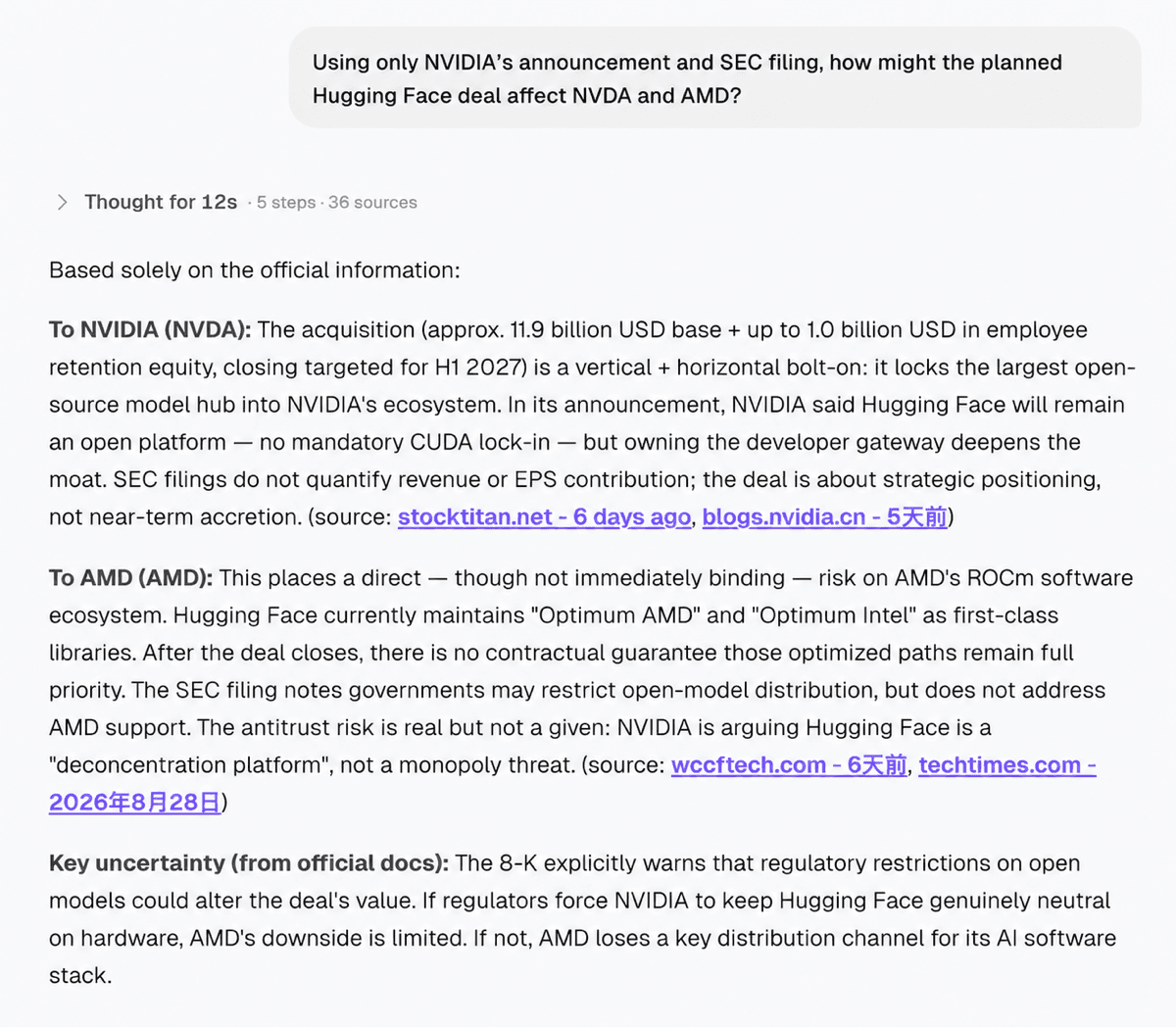
Figure 1. Bobby AI’s real-time scenario analysis of Bitcoin, COIN, CRCL, and HOOD. Editorial verification note: The prices, percentage moves, and “single biggest driver” shown in the screenshot reflect the generation time or the model’s attribution. They should not be treated as continuously valid market data or as proven causation. The screenshot cites a 3–4% Bitcoin decline, while the Axios and Reuters figures used in the article cover different time windows; the three figures should not be combined. Roughly $450.4 million in net outflows from U.S. spot Bitcoin ETFs on September 15 was corroborated across multiple data providers, but the entire outflow cannot be attributed to the CLARITY Act. Circle’s Arc mainnet launch and the U.S. Department of Justice charges against two former Robinhood employees were confirmed through primary sources. Those charges remain allegations, and the defendants are presumed innocent unless proven guilty. The question at the end of the screenshot does not represent a recommendation to buy.
Want to see how Bobby breaks down the issue? Send it the question shown in the image, then replace the tickers with the companies you follow.
U.S. Stock Map: Which Companies Are More Directly Connected to the Bill?
The following map explains business transmission channels only. It does not indicate a likely share-price direction or constitute trading advice.
Coinbase (COIN): The Most Direct Exchange-Platform Exposure
Coinbase’s business spans trading, custody, stablecoins, subscription services, derivatives, and institutional infrastructure. That makes it sensitive to listing standards, the SEC/CFTC boundary, stablecoin rules, and customer activity.
Coinbase disclosed that subscription and services revenue accounted for 48% of net revenue in the second quarter of 2026, while average USDC balances on the platform reached $20 billion. COIN is therefore no longer simply a proxy for “Bitcoin trading volume,” although legislative delays may still affect product-launch timing, compliance spending, and the policy-risk premium embedded in its valuation. See this breakdown of Coinbase’s revenue sources.
Circle (CRCL): Stablecoin Rules and Interest-Rate Exposure
Circle is the issuer of USDC. Its business is influenced not only by crypto-market activity but also by USDC circulation, yields on reserve assets, distribution costs, and the details of stablecoin regulation. If future negotiations again focus on stablecoin rewards, both COIN and CRCL may attract market attention, but their revenue structures are not the same.
Robinhood (HOOD): Retail Trading Activity Exposure
Robinhood offers crypto trading alongside stocks, options, and other retail financial products. Its exposure to the CLARITY Act is transmitted mainly through the range of assets it can list, crypto trading volume, user engagement, and compliance requirements. It should not be treated as equivalent to a crypto-only exchange.
Strategy and Bitcoin Miners: Closer to Bitcoin Price Elasticity
The near-term performance of Strategy (MSTR), MARA Holdings (MARA), Riot Platforms (RIOT), and CleanSpark (CLSK) is usually more sensitive to Bitcoin’s price, financing conditions, network hash rate, energy costs, and capital structure. The CLARITY Act is an indirect policy variable and should not be used by itself to explain moves in these stocks. For a comparison of how these exposures differ, see MSTR, COIN, and HOOD side by side.
ETFs: Separate Spot Bitcoin Exposure From Crypto-Equity Exposure
- iShares Bitcoin Trust ETF (IBIT)
- Fidelity Wise Origin Bitcoin Fund (FBTC)
- ARK 21Shares Bitcoin ETF (ARKB)
- ProShares Bitcoin Strategy ETF (BITO)
- Global X Blockchain ETF (BKCH)
IBIT, FBTC, and ARKB primarily track spot Bitcoin prices. BITO obtains exposure through futures and related instruments, while BKCH holds blockchain and crypto-industry companies. Their structures, fees, holdings, and sources of risk are different, so they should not be grouped together as one category of “crypto ETF.” If you hold both spot ETFs and crypto-related stocks, remember that they may still point to the same underlying exposures. See how to identify hidden concentration in a portfolio.
Ask Bobby to compare the structure, fees, and underlying holdings of these five ETFs so you can see which ones provide Bitcoin-price exposure and which ones provide equity exposure.
Where Are the Opportunities and Risks After the Legislative Delay?
Start by separating information that has been officially confirmed from scenario-based inferences that still need to be tested:
| Officially confirmed — Senate record and primary sources | Still to be tested — scenario inference |
|---|---|
| Roll Call Vote 234: 49 in favor, 50 against, one not voting; the cloture motion failed | Whether the Senate will schedule another vote, revise the text, or pursue an alternative legislative route |
| The procedural motion required 60 votes, and the vote concerned moving to consideration rather than final passage | Whether Congress can restart and complete the legislation in the time remaining this term |
| H.R. 3633 passed the House 294–134 on July 17, 2025 | How far the final Senate text would differ from the House bill |
| Ethics restrictions, state enforcement authority, and stablecoin rewards were negotiation disputes | Whether the two parties can reach a new compromise on those three areas |
| The SEC and CFTC issued joint guidance on digital-asset classification | How far administrative rulemaking can substitute for formal legislation |
| Coinbase reported subscription and services revenue equal to 48% of net revenue and an average USDC balance of $20 billion in the second quarter | The actual effect of the delay on each company’s compliance costs and asset-listing timetable |
Potential Opportunities
Renegotiation could produce a more durable bipartisan text. The failed vote shows that the existing compromise did not attract enough support to cross the 60-vote threshold. If further talks on ethics, enforcement, and consumer protection broaden that support, the eventual rules could prove more politically durable.
Regulators are still pursuing their existing rulemaking paths. The SEC and CFTC have issued joint guidance on digital-asset classification, and the SEC is also advancing an exemption framework for crypto assets. A legislative delay does not mean policymaking has stopped completely, although administrative rules are more vulnerable than statutes to changes in future administrations.
Company-level differences may become easier for the market to distinguish. As the simple narrative that “the industry will receive one clear set of rules” weakens, investors may pay more attention to each company’s licenses, revenue diversification, compliance capabilities, custody clients, stablecoin economics, and international footprint.
Key Risks
Federal regulatory boundaries remain uncertain. Companies may have to deal simultaneously with different standards from the SEC, CFTC, state regulators, and courts, increasing product-design and compliance costs.
Elections and conflicts of interest will continue to shape the legislative timeline. Senators remain divided over ethics restrictions on federal officials and their families’ digital-asset businesses. This is not merely a technical provision; it is a core variable in whether future proposals can win bipartisan support. For context, see this analysis of crypto assets and political conflicts of interest.
Markets may overinterpret a single vote. Bitcoin, COIN, CRCL, and HOOD will continue to respond to interest rates, risk appetite, trading volume, stablecoin balances, company earnings, and other regulatory developments. One procedural vote can change risk premiums, but it cannot determine long-term revenue or asset prices on its own.
What Should Markets Track Over the Next One to Three Months?
- Whether Senate leaders propose another vote, a revised text, or an alternative legislative route.
- Whether Democrats and Republicans reach a new compromise on ethics restrictions, state enforcement authority, and stablecoin rewards.
- Whether SEC and CFTC rules, interpretations, and enforcement priorities fill part of the legislative gap.
- Whether spot Bitcoin ETF net flows, crypto-market trading volume, and stablecoin balances show sustained changes.
- What COIN, CRCL, and HOOD disclose in subsequent earnings reports about compliance costs, listed assets, USDC economics, and trading activity.
- Whether the post-midterm composition of Congress changes the probability of passage in the next legislative round.
These indicators can help investors distinguish a one-day political headline from evidence about company operations.
How to Track This Theme With RockFlow and Bobby AI
Information around policy events falls into three layers: official records, media reporting, and model inference. The tracking process should follow the same order.
Step one: Confirm the official record. The type of vote, the vote count, and the official wording of the result determine the nature of the event. Defeating a procedural motion is completely different from formally rejecting a bill.
Step two: Group the tickers by transmission distance. In RockFlow, you can place COIN and CRCL in a “directly affected by market structure rules” group, HOOD in a “retail trading activity” group, MSTR and miners in a “Bitcoin price elasticity” group, and spot ETFs separately from blockchain-equity ETFs. The same headline should not be expected to produce the same response in every group.
Step three: Give each transmission channel a testable indicator and ask Bobby to keep monitoring it. You can use the following prompt directly:
Using only the Senate voting record, the bill text, and company disclosures, explain the type, result, and legal meaning of this CLARITY Act vote. Then separate what has been confirmed from scenario-based inferences about COIN, CRCL, HOOD, Bitcoin miners, and Bitcoin ETFs. For each inference, provide one indicator that can be checked over the next one to three months.
Send this prompt to Bobby, ask it to place facts and inferences in separate columns, and sort the results by your own holdings.
Readers who are new to policy-driven market events do not need to predict the direction of the bill, Bitcoin, and every crypto stock at once. Start by separating “what actually happened” from “what could be affected,” then see whether the tool helps you keep those two questions distinct. For six practical use cases to consider when choosing a tool, see how to choose an AI trading app.
Conclusion
The CLARITY Act failed to clear the Senate’s 60-vote procedural threshold, showing that U.S. crypto market structure legislation remains shaped by ethics restrictions, enforcement authority, stablecoin rewards, and election politics. This was not a final legal determination on crypto assets, but it did delay the point at which companies and investors might receive durable federal rules.
For public markets, COIN and CRCL are more directly tied to market structure and stablecoin economics. HOOD is more closely connected to retail trading activity, while MSTR, Bitcoin miners, and Bitcoin ETFs are more readily affected through Bitcoin prices and risk appetite. Instead of assigning every ticker the same “bullish” or “bearish” label, it is more useful to monitor new bill text, SEC and CFTC actions, company revenue structures, and actual fund flows.
The legislative process may turn several more times. Ask Bobby to build a CLARITY Act tracking checklist and update it whenever there is a new regulatory announcement, bill text, or company earnings report.
FAQ
Has the CLARITY Act Been Formally Rejected by the U.S. Senate?
No. The Senate rejected the procedural motion to invoke cloture and proceed to consideration, not a final vote on passage. The bill could theoretically be revised or introduced again, but its near-term timetable has moved back considerably.
What Was the Official Vote Result?
U.S. Senate Roll Call Vote 234 recorded 49 votes in favor, 50 against, and one senator not voting. The procedural motion required 60 votes, so it failed.
What Is the Main Goal of the CLARITY Act?
It seeks to establish a unified U.S. market structure for digital assets, clarify the regulatory division between the SEC and CFTC, and create rules for exchanges, brokers, dealers, and the issuance and trading of digital assets. The Senate text went through several rounds of revision, and its provisions have not become final law.
Why Are Coinbase and Circle Receiving More Attention?
Coinbase’s trading, custody, listing, and USDC businesses are directly connected to market structure rules. Circle issues USDC, and its revenue is tied to stablecoin scale, reserve yields, and distribution economics. The two companies nevertheless have different revenue structures and risks.
Does the Failed Vote Make Bitcoin or Crypto Trading Illegal in the United States?
No. Existing federal and state laws, regulatory rules, and enforcement frameworks remain in place. The direct effect of the failed vote is a delay in the timetable for a unified federal market structure law—not a sudden change in the legal status of every crypto business.
What Matters Most for Beginners Tracking This Kind of Policy Event?
First confirm the type of vote and the official result. Then distinguish companies directly affected by regulation from companies sensitive to Bitcoin prices and from ETFs. When choosing a tool, prioritize whether it identifies sources, timestamps, and uncertainty and separates confirmed facts from inference—not whether it produces a simple buy or sell conclusion.
Sources
- U.S. Senate: Roll Call Vote 234 on H.R. 3633 — September 15, 2026: timing, vote count, and result of the procedural vote.
- NPR/KNKX: A Trump-backed crypto bill just suffered a bruising defeat in the Senate: the vote result, partisan divisions, and dispute over ethics provisions.
- U.S. House Clerk: H.R. 3633 Roll Call 199 — July 17, 2025: final House vote count.
- GovInfo: Digital Asset Market Clarity Act of 2025: the House-reported bill text, goals, and structure.
- U.S. Senate Banking Committee: May 2026 market structure bill text announcement: Senate negotiating text and legislative goals.
- Associated Press: Senate blocks cryptocurrency regulation: the vote background, political disputes, and market response.
- Associated Press: U.S. stocks slip after oil prices and bond yields rise: COIN and HOOD performance and the broader market backdrop.
- Axios: Crypto’s Clarity Act fails to advance in Senate: Bitcoin’s immediate post-vote reaction and the legislative outlook.
- SEC: Application of Federal Securities Laws to Crypto Assets: joint SEC/CFTC guidance on crypto-asset classification and regulatory boundaries.
- Coinbase: Second-quarter 2026 earnings disclosure: subscription and services revenue, USDC balances, and diversification data.
- Circle: Arc mainnet launch — September 16, 2026: verification of the Arc mainnet information shown in the screenshot.
- U.S. Department of Justice: Two Robinhood Employees Charged With Fraud: verification of the commodity fraud and wire fraud charges and the presumption of innocence.
- CoinDesk: Bitcoin ETFs shed $450 million as the CLARITY Act fails: U.S. spot Bitcoin ETF net outflows and their comparison with the largest outflow since June.
Risk Disclosure
This article is for market information, policy research, and investor education only. It does not constitute investment advice, a securities recommendation, a trading instruction, legal advice, or a promise of returns. Bill text, legislative timing, regulatory interpretations, and political negotiations may change. Bitcoin, crypto-related stocks, and ETFs may be affected by interest rates, liquidity, valuation, trading volume, company earnings, and other events. Bobby AI content is AI-generated supplementary analysis and is not an official disclosure by Congress, a regulator, or a company.