CXMT IPO: 466% Debut Surge and Global DRAM Impact | RockFlow

RockFlow Jacko
July 28, 2026 · 16 min read

CXMT (688825) Jumps 466% on Debut and Becomes the Largest A-Share Company by Market Cap
How One IPO Changes the Framework for Tracking Global DRAM Competition
Introduction
Based on the July 27, 2026 close, CXMT (688825) priced its IPO at RMB 8.66 and finished its first trading day at RMB 49.00, a 465.82% gain. Its market capitalization reached approximately RMB 3.28 trillion, overtaking Industrial and Commercial Bank of China to become the largest A-share company by market value. On the morning of July 28, the stock opened 7.71% lower before turning positive intraday, underscoring that price discovery remained active.
That headline valuation needs to be read alongside the company’s float structure. Unrestricted shares initially available for trading represented about 6.73% of post-IPO shares outstanding. A relatively small free float can amplify volatility and make total market capitalization more sensitive to the marginal transaction price. The longer-term industry question is whether the RMB 57.92 billion in IPO proceeds can translate into DRAM capacity, process upgrades and R&D output—and when those investments begin to affect supply, product mix and pricing.
Key Points
- The 466% gain needs float context: the initial free float of roughly 6.73% is essential to interpreting the RMB 3.28 trillion market capitalization.
- CXMT ranks fourth in global DRAM revenue, although its revenue mix, process technology and HBM capabilities still trail the three incumbents.
- The near-term overlap with Micron is concentrated in China and conventional DRAM. Micron (MU) currently has greater exposure to HBM, server DDR5 and data-center customers.
- Equipment exposure differs by product and policy. Applied Materials (AMAT), Lam Research (LRCX), KLA (KLAC) and ASML (ASML) face different restrictions, licensing requirements and China exposure.
1. Why Did CXMT (688825) Rise 466% on Its First Trading Day?
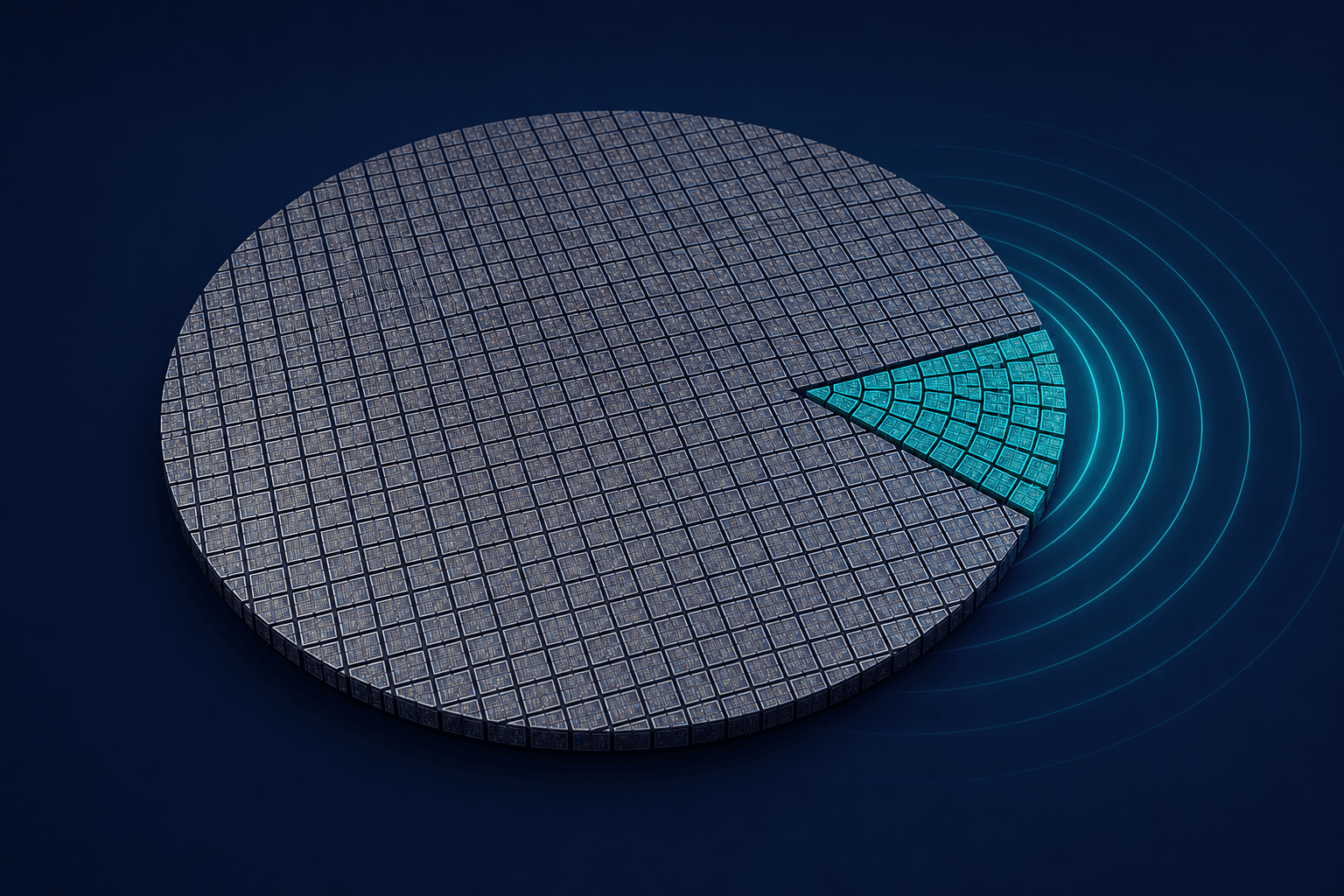
CXMT’s listing documents show approximately 66.881 billion shares outstanding after the offering. About 4.503 billion unrestricted shares were initially tradable, equal to 6.73% of the total. Multiplying the RMB 49.00 closing price by total shares outstanding produces a market capitalization of roughly RMB 3.28 trillion, while the free-float market value was far smaller.
With a limited initial float, marginal transactions can have an outsized effect on the implied value of the entire share base. STAR Market IPOs are not subject to daily price limits during their first five trading sessions, concentrating price discovery in the opening week. The July 28 reversal from a 7.71% lower open to an intraday gain also shows why the company’s market-cap ranking needs to be checked daily. Turnover, trading value, the closing price and free-float market capitalization provide more information than the first-day percentage gain alone.
The IPO proceeds matter on a much longer timeline. The base offering raised approximately RMB 57.92 billion. Only when that capital is converted into wafer capacity, yield improvement and customer qualification can it enter the global DRAM supply curve. The IPO valuation itself does not increase current-period output.
2. Where Does CXMT (688825) Sit in the Global DRAM Market?
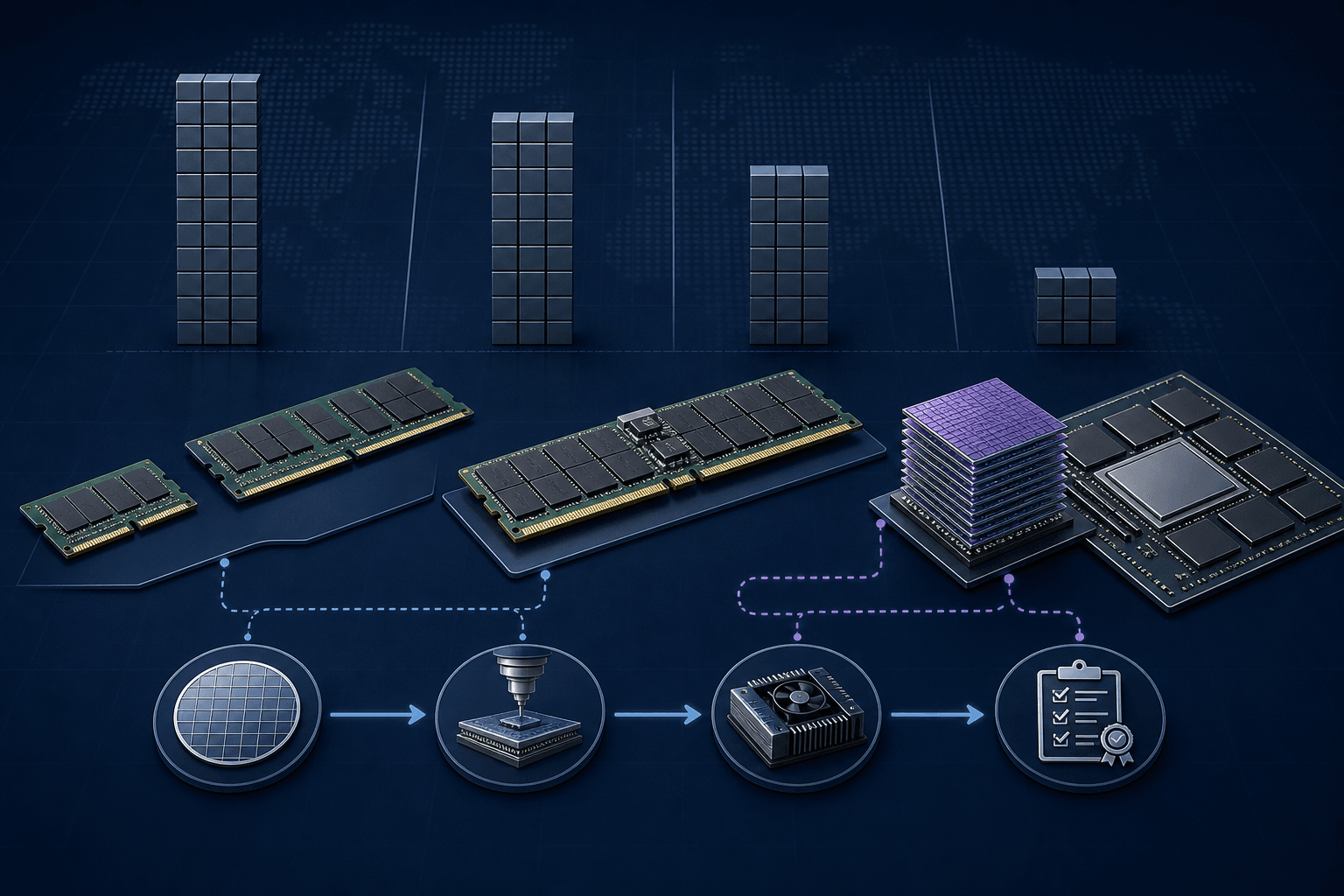
DRAM serves smartphones, PCs, vehicles, servers and AI accelerator systems. Value per bit, qualification cycles and technical barriers vary substantially by product. TrendForce estimates that CXMT (688825) ranked fourth with a 7.6% global DRAM revenue share in the first quarter of 2026. Samsung, SK hynix and Micron (MU) together accounted for 89.7%, leaving approximately 2.7% for other suppliers.
CXMT’s current commercial base is concentrated in LPDDR4X, DDR4/DDR5 and domestic Chinese customers. Its transition to the G4 process has supported better product quality and production output, while server DRAM is becoming more important in the mix. HBM requires die stacking, advanced packaging, thermal management and customer-platform coordination, so progress in conventional DRAM capacity cannot be extrapolated directly into an HBM commercialization timeline.
According to the prospectus, CXMT (688825) generated RMB 61.799 billion in revenue and RMB 1.875 billion in net income attributable to shareholders in 2025. In the first quarter of 2026, revenue reached RMB 50.800 billion and attributable net income reached RMB 24.762 billion. The company projected attributable net income of RMB 50 billion to RMB 57 billion for the first half of 2026, compared with a RMB 2.332 billion loss a year earlier. The earnings inflection reflects higher DRAM pricing, shipment growth and a better product mix; ASP, bit shipments, gross margin and inventory days will be needed to separate those drivers.
Manufacturing scale also depends on the surrounding industrial base. At the end of 2025, CXMT employed 19,298 people, including 6,259 R&D staff, or 32.43% of the workforce. Hefei has developed a semiconductor cluster spanning equipment, materials, packaging and testing, and end customers. Any claimed cluster advantage still needs to be tested through delivery lead times, domestic equipment adoption and customer qualifications.
3. CXMT vs. Micron: How Could CXMT (688825) Affect Micron (MU)?
Micron (MU) is the clearest U.S.-listed comparison. For fiscal Q3 2026, Micron’s Cloud Memory Business Unit generated $13.769 billion in revenue at an 83% gross margin. HBM4 was in high-volume shipment for its lead customer’s platform, while HBM4E volume production was expected in calendar 2027. The more Micron’s mix shifts toward HBM and high-capacity server memory, the less its near-term earnings are tied to conventional DRAM pricing in China.
Competitive pressure can still build through three channels: broader customer qualification, additional conventional DRAM capacity and greater bargaining power for domestic buyers. Micron (MU) management has acknowledged that Chinese memory suppliers have gained capability and market share, while noting that the overwhelming majority of their output is still sold within China.
The operating metrics to watch include Micron’s DRAM bit shipments and ASP, HBM revenue and committed capacity, data-center revenue mix and China exposure. For CXMT (688825), the relevant indicators are process migration, server DRAM mix, customer qualification and capacity ramp. Both companies carry a “memory” label, but their profit drivers are increasingly segmented by product.
4. Which Semiconductor Equipment Companies Are Exposed to China’s Memory Expansion?
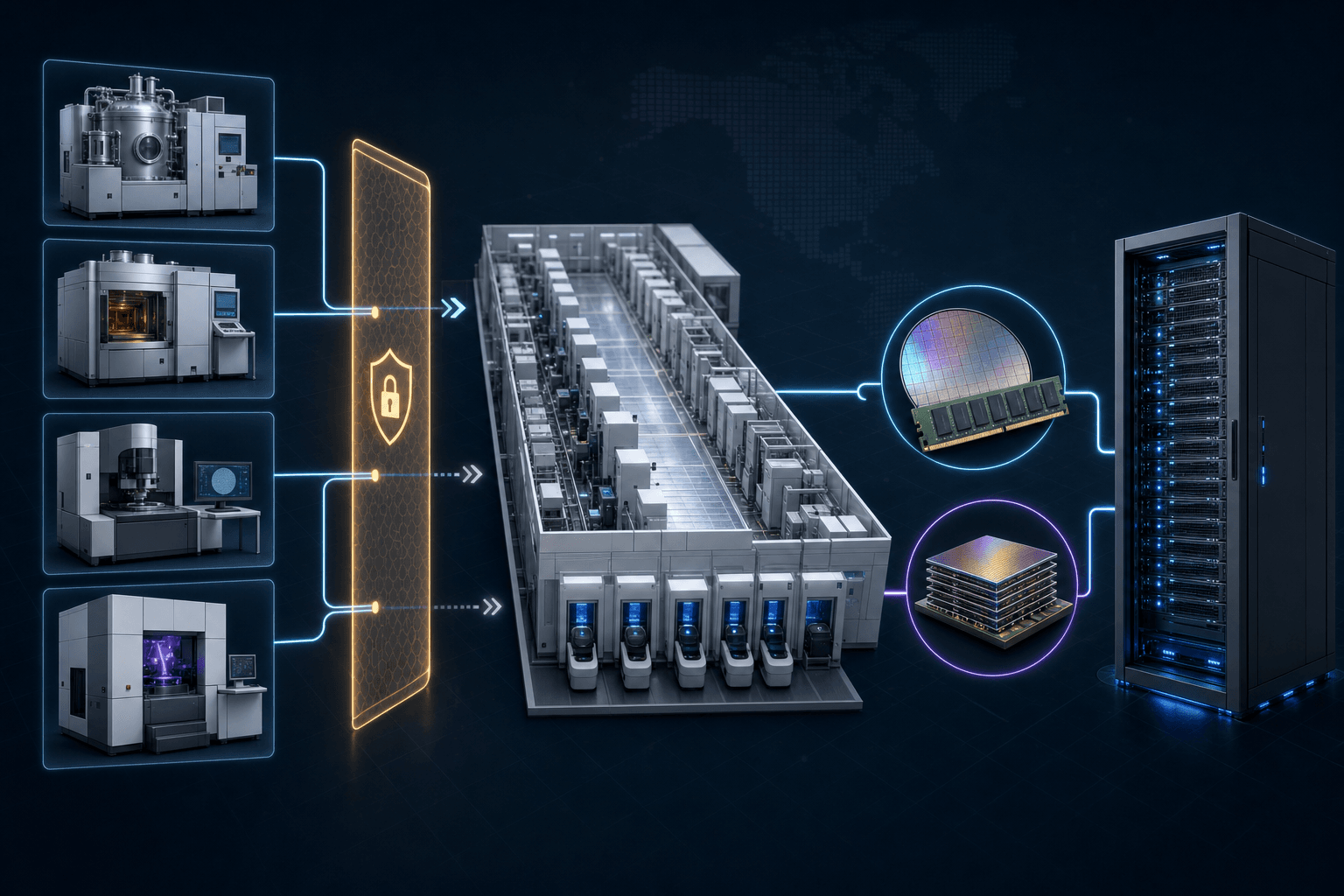
A memory-fab expansion requires deposition, etch, metrology, inspection and lithography. Applied Materials (AMAT) supplies materials-engineering and thin-film systems; Lam Research (LRCX) is a major provider of etch and deposition tools; KLA (KLAC) specializes in process control and defect inspection; and ASML (ASML) supplies lithography systems. All four are exposed to changes in global memory capital expenditures.
Geographic exposure complicates the transmission. Lam Research (LRCX) reported $5.841 billion in revenue for fiscal Q3 2026, with China accounting for 34%. Applied Materials (AMAT) reported $7.910 billion in fiscal Q2 2026 revenue; China represented 27% of revenue, and DRAM represented 29% of Semiconductor Systems revenue. KLA (KLAC) said revenue from customers in China increased 5% year over year in fiscal Q3 2026. ASML (ASML) reported €9.326 billion in net sales for calendar Q2 2026, but the systems it can ship to China remain constrained by Dutch and U.S. policy.
CXMT’s IPO proceeds will not translate mechanically into orders for overseas equipment vendors. The key questions are whether a tool is controlled, whether a license can be obtained, how much domestic substitution is available, how long delivery and acceptance take, and whether an expansion project has progressed from construction to tool installation. China revenue, memory orders, deferred revenue and service revenue can help test whether the transmission is occurring.
5. Can AI Memory Demand Absorb Additional DRAM Supply?
NVIDIA (NVDA) sits at the demand end of the chain. AI accelerators rely on HBM for bandwidth, while server DDR5 provides host-side memory capacity. Growth in training and inference clusters can support both premium HBM and conventional server DRAM, but the supplier bases, qualification requirements and profit pools are not identical.
NVIDIA platform shipments, HBM content, hyperscaler capital expenditures and server DRAM contract pricing can indicate whether AI demand continues to absorb incremental supply. If HBM continues to consume advanced DRAM wafer capacity, conventional DRAM may remain tight. If CXMT (688825) ramps faster while end demand slows, pricing pressure could emerge first in more mature products.
Industry and Market Tracking Framework
| Layer | Core Metrics | Question to Test | Cadence |
|---|---|---|---|
| Price discovery | Close, turnover, trading value, free-float market cap | Is the market-cap ranking holding? | Daily / first month |
| Issuer operations | Capacity, yield, mix, customer qualification | Is IPO capital becoming effective supply? | Quarterly / filings |
| DRAM cycle | Contract and spot prices, inventory, bit shipments | Is supply growth outpacing AI demand? | Monthly / quarterly |
| High-end memory | HBM qualification, server DDR5 mix | Is competition moving beyond conventional DRAM? | Quarterly |
| Equipment chain | China revenue, memory orders, licenses, deferred revenue | Are overseas vendors booking confirmable orders? | Quarterly |
| Policy | Entity lists, equipment rules, license scope | Are technology or capacity paths constrained? | Event-driven |
RockFlow Theme Tracking
For a research framework spanning “CXMT IPO—DRAM pricing—HBM qualification—equipment export rules,” the focus should remain on company filings, financial metrics and policy changes. RockFlow can provide access to relevant company and market information, while Bobby AI can help organize public materials. Figures, dates and definitions should still be checked against original company filings, regulatory disclosures and financial statements.
For readers new to ai invest and exploring research tools through searches such as best ai trading app or best ai trading app for beginners, this case offers a repeatable process: track key variables, identify changes in the evidence and compare each company’s business exposure. A rockflow ai trading workflow can serve as an entry point for information research, but conclusions should remain grounded in verifiable public sources.
Final Thoughts
CXMT (688825)’s debut placed China’s DRAM supply chain under a global spotlight. The 466% gain and RMB 3.28 trillion market capitalization need to be interpreted alongside the limited free float and opening-week price discovery. The developments that can alter the industry structure will take longer: capital must become capacity, process technology must translate into yield, and products must pass customer qualification before incremental supply can affect pricing and profitability.
The implications for Micron (MU) and the equipment chain also vary by product and policy exposure. Conventional DRAM, server DDR5, HBM, deposition and etch, process control, and lithography each require their own metrics. A continuous tracking framework helps separate market narratives from operating evidence.
FAQ
1. Why did CXMT (688825) rise about 466% on its first trading day?
The RMB 49.00 close was 465.82% above the RMB 8.66 IPO price. STAR Market IPOs have no daily price limits during their first five trading sessions, and unrestricted shares initially represented only about 6.73% of total shares outstanding.
2. Was CXMT (688825) China’s largest listed company by market capitalization?
Based on the July 27, 2026 close, CXMT was the largest company in China’s A-share market by total market capitalization. The statement does not include companies listed only in Hong Kong or overseas, and the ranking changes with share prices.
3. Will CXMT (688825) immediately change global DRAM pricing?
Not as a direct consequence of the IPO. Capital must pass through fab construction, equipment installation, yield ramp and customer qualification before it becomes effective supply.
4. Where is the most immediate overlap with Micron?
The closest overlap is in China, mobile and conventional DRAM, and server DDR5. Micron (MU) is further ahead in HBM commercialization and premium data-center memory, so the comparison needs to be made product by product.
5. Why track semiconductor equipment companies?
DRAM expansion supports demand for deposition, etch, inspection and lithography, while export controls, licensing and domestic substitution affect who receives the orders. Geographic revenue and order disclosures from Applied Materials (AMAT), Lam Research (LRCX), KLA (KLAC) and ASML (ASML) provide useful evidence.
Sources
- CXMT prospectus and listing documents — financials, workforce, products, float structure and use of proceeds
- Reuters | CXMT vaults to top of China’s valuation with 466% surge — first-day close, market capitalization and IPO context
- TrendForce | CXMT’s STAR debut reshapes global memory dynamics — DRAM revenue share, process transition and product mix
- Micron | Fiscal Q3 2026 results — Cloud Memory Business Unit, HBM4 and HBM4E
- Applied Materials | Fiscal Q2 2026 filing — latest revenue, China mix and DRAM exposure; Lam and KLA data cross-checked against their SEC filings
- Wallstreetcn | The biggest beneficiaries of CXMT’s listing — narrative context on Hefei’s industrial investment; factual figures checked against the prospectus
Disclaimer: For market information and industry research only. This article is not investment advice, a trading instruction, a securities recommendation or a promise of returns. Market data can change rapidly; readers should rely on company filings, regulatory disclosures and the latest public information.